

Intraocular Lens Options
Choosing the Right Lens for Your Eyes

During cataract or refractive lens exchange surgery, the eye’s natural lens is replaced with a clear, artificial intraocular lens (IOL). The type of lens you choose determines how much you rely on glasses, and how your eyes perform in different lighting conditions. At Forest Eye Surgery, we offer a broad range of advanced intraocular lenses to suit each patient’s eyes, lifestyle, and visual goals.
Multifocal intraocular lenses
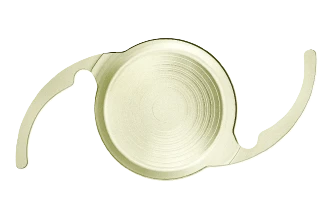
Multifocal intraocular lenses provide clear vision at all distances — near, intermediate, and far.
They are best for people with active lifestyles, who wish to minimise or eliminate their dependence on glasses. These lenses result in mild glare and halos around nighttime lighting, although this feature becomes less noticeable over the first 3 months. There are also important considerations of eye health and eye shape, so not all people are suitable candidates.
Extended Depth of Focus (EDOF) Lenses
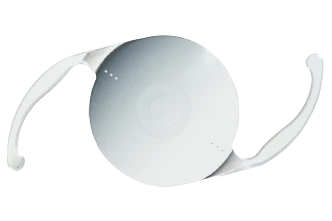
Extended depth of focus (EDoF) intraocular lenses provide a smooth transition from far to intermediate distances without glasses.
They also offer some functional near vision which can be augmented through a mini-monovision surgical technique. They are best for people who want excellent distance and computer vision, minimal glare, and natural contrast. Although reading glasses may still be needed for fine or prolonged close work.
Monofocal Lenses
Monofocal intraocular lenses offer crisp, high contrast vision at one focal distance, usually far.
They are best for people who wish to continue wearing glasses for some tasks. They provide the best possible vision in the setting of other eye health conditions such as macular degeneration.
Specialised Lens Options
(Used Case-by-Case)
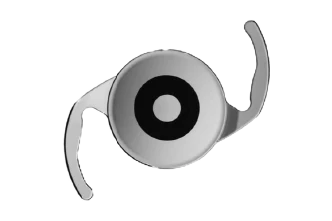
Secondary or “Piggyback” Lenses
These lenses are used in select cases to fine-tune vision after previous cataract surgery. The secondary lens is placed in front of the existing intraocular lens implant, providing small adjustments in vision without replacing the original intraocular lens.
These intraocular lenses are mainly reserved for complex cases that require a staged procedure. They are very useful for eyes that have a highly irregular shape.
Pinhole Lenses
A specialised option for patients with irregular corneas or those that have undergone older forms of refractive corneal surgery. They are usually considered only for specific eye conditions after detailed assessment. The central pinhole aperture improves focus and reduces visual distortions in eyes that are otherwise highly abnormal in shape.
Lens Comparison at a Glance
| Lens Type | Distance Vision | Intermediate (Computer) | Near (Reading) | Glasses Dependence | Glare / Halos | Ideal For |
|---|---|---|---|---|---|---|
| Multifocal / Trifocal | <i class="fa-solid text-primary fa-star"></i><i class="fa-solid text-primary fa-star"></i><i class="fa-solid text-primary fa-star"></i><i class="fa-solid text-primary fa-star"></i> | <i class="fa-solid text-primary fa-star"></i><i class="fa-solid text-primary fa-star"></i><i class="fa-solid text-primary fa-star"></i><i class="fa-solid text-primary fa-star"></i> | <i class="fa-solid text-primary fa-star"></i><i class="fa-solid text-primary fa-star"></i><i class="fa-solid text-primary fa-star"></i><i class="fa-solid text-primary fa-star"></i> | Minimal | Mild (temporary) | Patients wanting maximum freedom from glasses |
| Extended Depth of Focus (EDOF) | <i class="fa-solid text-primary fa-star"></i><i class="fa-solid text-primary fa-star"></i><i class="fa-solid text-primary fa-star"></i><i class="fa-solid text-primary fa-star"></i> | <i class="fa-solid text-primary fa-star"></i><i class="fa-solid text-primary fa-star"></i><i class="fa-solid text-primary fa-star"></i><i class="fa-solid text-primary fa-star"></i> | <i class="fa-solid text-primary fa-star"></i><i class="fa-solid text-primary fa-star"></i> | Occasional | Very low | Patients wanting natural vision with minimal glare |
| Monofocal (Single-Focus) | <i class="fa-solid text-primary fa-star"></i><i class="fa-solid text-primary fa-star"></i><i class="fa-solid text-primary fa-star"></i><i class="fa-solid text-primary fa-star"></i> | <i class="fa-solid text-primary fa-star"></i><i class="fa-solid text-primary fa-star"></i> | <i class="fa-solid text-primary fa-star"></i> | Regular | Very low | Patients preferring crisp distance vision or with other eye conditions |
| Secondary / Piggyback (Specialised) | <i class="fa-solid text-primary fa-star"></i><i class="fa-solid text-primary fa-star"></i><i class="fa-solid text-primary fa-star"></i><i class="fa-solid text-primary fa-star"></i> | <i class="fa-solid text-primary fa-star"></i><i class="fa-solid text-primary fa-star"></i> | <i class="fa-solid text-primary fa-star"></i> | Case-by-case | Very low | Patients needing minor correction after cataract surgery |
| Pinhole (Specialised) | <i class="fa-solid text-primary fa-star"></i><i class="fa-solid text-primary fa-star"></i><i class="fa-solid text-primary fa-star"></i> | <i class="fa-solid text-primary fa-star"></i><i class="fa-solid text-primary fa-star"></i> | <i class="fa-solid text-primary fa-star"></i> | Variable | Low | Selected patients with irregular corneas or prior refractive surgery |
= relative performance (higher = better)
Frequently Asked Questions
How do I know which lens is best for me?
Your lens choice depends on your eye health, visual goals, and daily activities. This is a crucial part of your consultation, requiring significant surgeon expertise and detailed assessment of your eye health, eye shape, lifestyle and vision goals. (link to blog for more info)
Will private health insurance cover my lens?
Private health insurance covers the cost of all intraocular lenses regardless of type if you have hospital cover for cataract surgery. Otherwise, a full cost breakdown can be given prior to surgery.
Can I mix and match lenses?
This is determined on a case-by-case basis but is not done routinely.
Will I still need glasses?
This depends largely on the type of intraocular lens chosen. Many patients with trifocal or extended-depth lenses achieve excellent vision for most tasks. Some patient may still prefer light glasses for prolonged reading or very fine work.
Are all intraocular lenses safe?
Yes. All intraocular lenses offered at Forest Eye Surgery are approved by the Therapeutic Goods Administration (TGA). They are clinically proven and used widely across Australia and internationally.
Want to know more?
Today’s advanced lens implants can restore your vision. Get in touch by phone, email or our online form.
Enquire today:
Unit 11, Building 7
49 Frenchs Forest Rd East
Frenchs Forest NSW 2086
Website by: 