

Cataract

Those suffering from cataracts experience a clouding of the natural lens inside the eye. The condition is very common and often inevitable as we age, with 60% of the population experiencing the visual complication as they reach their 60s.
What is a cataract?
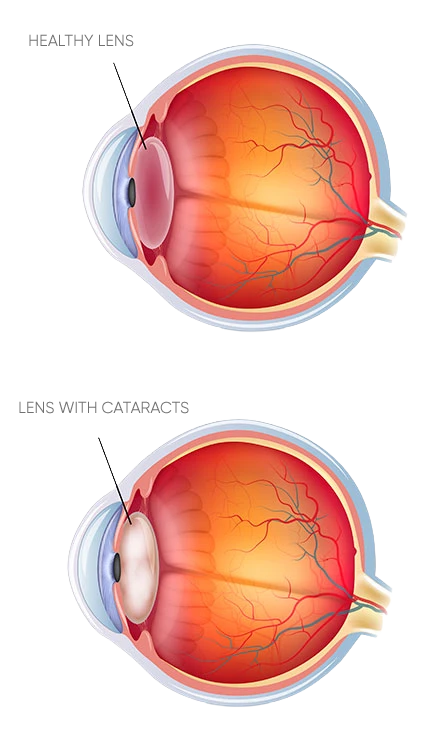
Cataracts are a common visual problem. Often developing very gradually, the natural crystalline lens becomes clouded, causing vision to become misty. It is the most common cause of vision loss in the world. The word “cataract” comes from the Greek word “Cataracti” which means waterfall. The lens can take on this appearance when the condition is quite advanced.
The clouding of the natural lens of the eye affects us all as we age. Some of us develop this condition earlier than others but with all of us now living longer, unfortunately, this has become one of life’s inevitabilities.
Fortunately, it is treatable, and advances in cataract treatment mean that the problem can be treated very effectively with a simple and safe procedure.
What are the symptoms of cataracts?
The lens of each eye needs to be clear in order for your eyes to work properly, so cloudy lenses adversely affect your vision. In a normal eye, the clear lens allows light to reach the retina at the back of the eye, which then communicates with the brain via the optic nerve – this is how we see. However, with a cataract, less light can reach the retina, so your vision is affected.
The problem tends to develop slowly over time. Eventually, cataracts result in a gradual loss of the clarity of vision. Often, patients may complain of:
- Cloudiness or mistiness
- A fading or loss in the vibrancy of colour (although this tends to be a gradual symptom and less obvious)
- Increased light scatter, resulting in a dazzling “glare” when the eye is exposed to bright lights
- Changes to their glasses prescription
What are the causes of cataracts?
As well as getting older, there are other factors that contribute to the likelihood of developing cataracts.
- Age - Because they develop gradually over time, cataracts are much more common in older people
- UV damage as a result of exposure to sunlight
- Familial factors: cataracts run in families, so if close relatives suffer from the symptoms then there will be an increased risk to yourself
- Steroid use
- Ocular inflammation
- Previous trauma
- Diabetes
What are the treatment options for cataracts?
The only way to treat cataracts is through the surgical removal of the cloudy protein within the natural lens. There is no way to reverse or “cure” a cataract.
Cataract surgery is a very successful treatment option and is the most commonly performed procedure in Australia. The surgery takes around 15 minutes, and is performed as a day case under local anaesthetic in most cases.
An ultrasound probe is used to gently break up and remove the cloudy natural lens, preparing the eye for an artificial lens to be inserted.

How to choose an intraocular lens (IOL)?
Choosing the right IOL is an important decision that can significantly influence your post-surgery vision and overall quality of life.
Choosing your cataract surgeon
Cataract surgery is the most common surgical procedure performed in Australia.
Almost every eye specialist (ophthalmologist) is trained in cataract surgery.
So how do you choose the best surgeon for your goals?
- Experience
It is worthwhile seeing a surgeon who dedicates their practice to advanced cataract surgery. These surgeons keep up to date with the latest advances in surgery techniques and tend to be experienced with a wide range of intraocular lenses (IOLs) options. They are also best suited to dealing with complex surgical cases.
- Knowledge
Equipment proficiency
Ensure that the surgeon you see is well versed in modern diagnostic tools and surgical technologies relating to cataract surgery, and that they are able to apply these technologies to your eyes safely and effectively.Intraocular lens options
If you wish to reduce your dependence on glasses or eliminate them entirely, make sure that your surgeon has intimate knowledge of premium intraocular lenses, and the finer nuances of each type and brand.
Intraocular lens technology is always evolving, and new lenses are released regularly. It is important that you choose a surgeon who knows which lenses are delivering on what they promise and are worth adopting into their surgical practice.
- Communication
Choose a surgeon who actively listens to your goals, concerns and questions. The right surgeon is knowledgeable and puts you at ease, giving you the confidence that your eyes are in good hands.
Continue reading to our blog post "How to choose your cataract surgeon?" which details questions you should ask your surgeon during your consultation.
Enquire today:
Unit 11, Building 7
49 Frenchs Forest Rd East
Frenchs Forest NSW 2086
Website by: 